
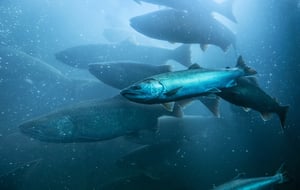
Norwegian Greentech has developed water treatment solutions for land-based aquaculture where UV intensity is continuously adjusted to water flow and water quality. The solutions are designed to prevent unwanted microorganisms and contribute to stable, predictable biological conditions in operations.
Land-based aquaculture provides greater opportunities to control water composition and movement than open sea systems. At the same time, it places high demands on precise water treatment.
When the entire production depends on stable water quality – around the clock, all year round – the margins are small. Unwanted microorganisms rarely arise as the result of a single incident, but rather as the accumulation of small deviations over time. In this context, precision in water treatment becomes crucial.
When “enough” UV is not precise enough
UV disinfection is an established, chemical-free method for inactivating microorganisms in aquaculture. Nevertheless, there are major differences in how UV is applied in practice. Many traditional solutions are based on fixed power settings or coarse regulation, adapted to an assumed average.
The challenge is that water flow, particle content and light transmittance are rarely constant.
“In a land-based facility, water conditions are dynamic. When UV dosing does not precisely follow these changes, there is a risk of either too low a dose – increasing biological risk – or too high a dose, leading to unnecessary energy consumption and wear on equipment,” says Børge Gjelseth, Commercial Director at Norwegian Greentech.
 UV chamber from Norwegian Greentech. Precise UV dosing means that UV intensity is dynamically regulated in line with water flow and water quality. Shown here is one of Norwegian Greentech’s UV chambers, among the most efficient UV solutions on the market.
UV performance is about dose
UV disinfection works by exposing pathogens to a sufficiently high UV dose over time. What matters is not the lamp’s nominal output, but how much UV energy each individual microorganism actually receives as it passes through the reactor.
In land-based aquaculture facilities, water volume, flow velocity and water quality vary continuously. This means that microorganisms follow different flow paths and spend different amounts of time in the UV chamber. If UV intensity is not adjusted to these variations, parts of the water flow may receive an insufficient UV dose.
Precise UV dosing means that UV intensity is dynamically regulated in line with water flow and water quality. This ensures that a sufficient UV dose is delivered even along flow paths that would otherwise receive the lowest exposure. The result is more predictable inactivation of unwanted microorganisms and reduced biological risk in the facility.
Biological stability
In the development of new land-based aquaculture facilities, water treatment has taken on an increasingly important role and is now an integral part of facility design. This is also why Nordic Halibut has chosen a solution with integrated water treatment and control systems for its new facility at Torjulvågen in Tingvoll. The facility is a key element in the company’s long-term plan to increase production of Atlantic halibut to more than 10,000 tonnes by 2031.
“For us, it is crucial to establish a production facility that meets the strictest requirements for fish welfare, environmental performance and operational reliability,” says Gunnar Brekstad of Nordic Halibut AS. “Norwegian Greentech delivers a holistic solution that gives us good control over water quality and confidence in sustainable production.”
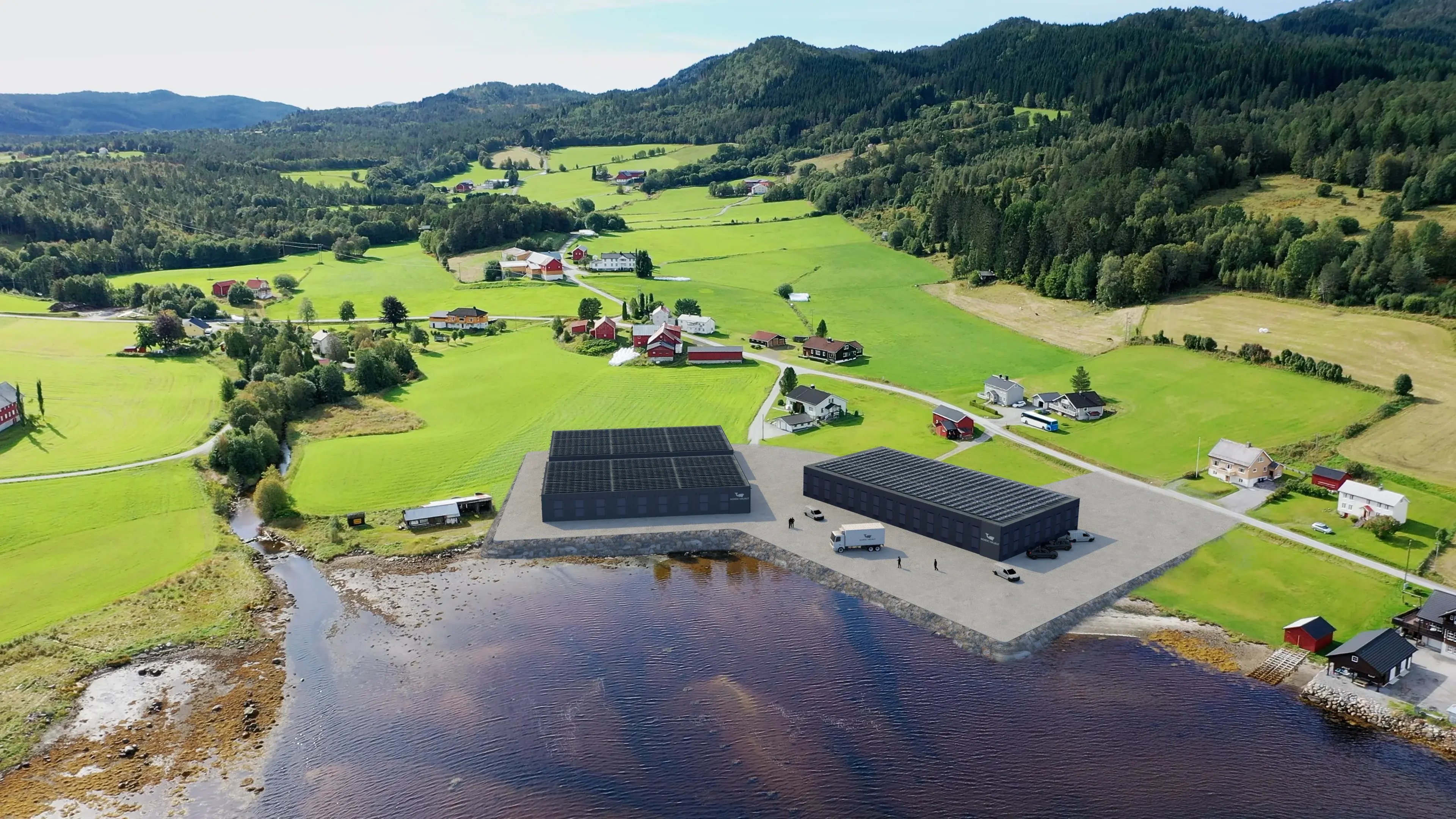 Nordic Halibut is building a new fully integrated land-based facility for halibut farming at Torjulvågen in Tingvoll municipality.
Redundancy and flexibility
By delivering UV treatment per intake line, Norwegian Greentech’s solution provides both redundancy and operational flexibility, as well as the possibility of selectively isolating parts of the system when needed. At the same time, an overarching control system ensures continuous monitoring, logging and adjustment of the water treatment.
“It is this control that makes precision possible in practice. Without real-time data and automated regulation, UV dosing quickly becomes inaccurate,” says Gjelseth.
For the farmer, this means more stable biological operation, better documentation in relation to regulatory requirements, and reduced risk of unwanted incidents.
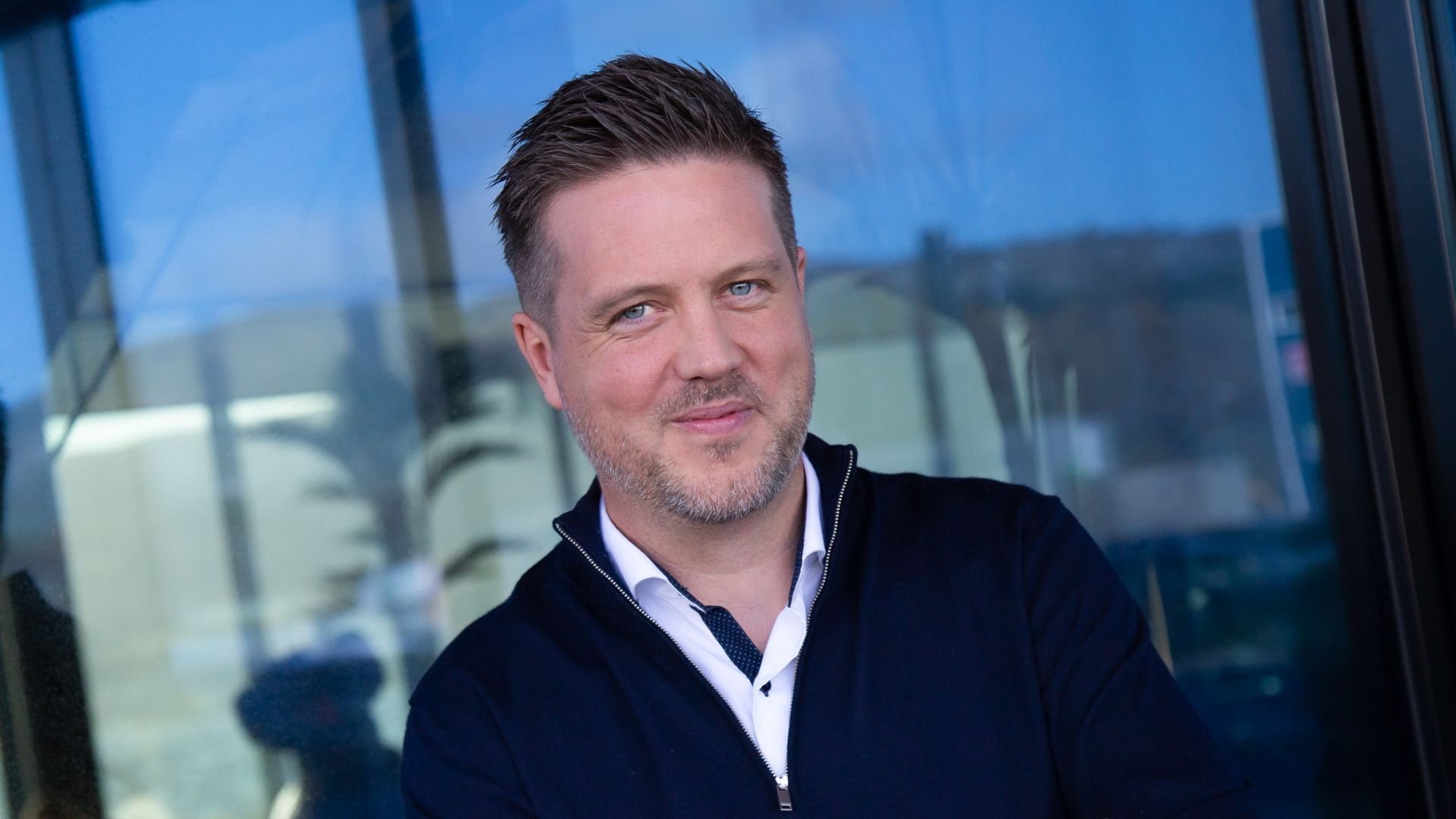
Børge Gjelseth, Commercial Director at Greentech, explains that an overarching control system ensures continuous monitoring, logging and adjustment of the water treatment.
When every drop counts
Land-based aquaculture is developing rapidly, both in Norway and internationally. Many projects are technologically ambitious and capital-intensive. In this context, the choice of water treatment solution is about more than technical specifications.
Norwegian Greentech has delivered around 1,000 water treatment systems to markets with strict regulatory requirements and offers both global service and remote support.
“We deliver when every drop counts. It is as much about expertise and relationships as it is about technology,” says Gjelseth.
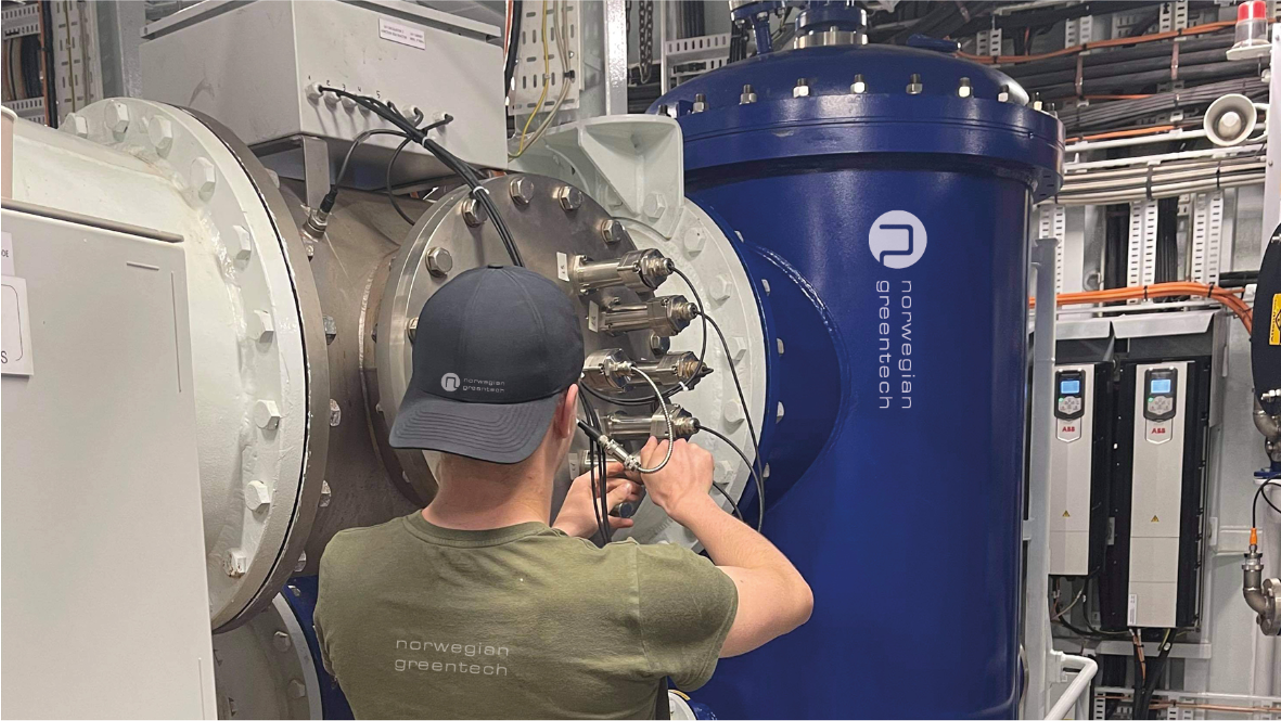
Global service: Norwegian Greentech has delivered around 1,000 water treatment systems to markets with strict regulatory requirements and offers both global service and remote support.
The details that make the whole
For new and existing land-based aquaculture facilities, precise UV dosing may appear to be a technical detail. In practice, it is often the opposite. It is the details that determine the whole.
“When the correct UV intensity is maintained at any water flow, biological risk is reduced – and stable operation becomes the result of deliberate design,” concludes Børge Gjelseth.
For further information, please contact:
Børge Gjelseth
SVP Commercial, Norwegian Greentech
Tel: +47 90 06 11 97
Email: borge.gjelseth@norwegiangt.no
About Norwegian Greentech
Norwegian Greentech is a provider of sustainable systems for clean water. The company’s main product is a ballast water treatment system, and it also supplies a range of water treatment solutions for both offshore and land-based aquaculture. To date, Norwegian Greentech has delivered more than 800 treatment systems to markets experiencing strong growth driven by increasingly stringent international regulations.
www.norwegiangt.no
